How Sleep Reduces Stress
You already know you feel terrible when you haven’t slept well. But what most people don’t realise is that poor sleep and chronic stress aren’t two separate problems — they are one relentless cycle, each one feeding the other.
Understanding how sleep reduces stress is vital for your health and well-being. How sleep reduces stress can empower you to take control of your health.
When you’re stressed, your body floods itself with cortisol — the hormone designed to keep you sharp and alert in a crisis. The problem? Cortisol doesn’t know the difference between a genuine emergency and a difficult week at work. It simply keeps you awake, wired, and unable to wind down.
Then, after a night of shallow or broken sleep, your stress hormones spike again the next morning — and the whole cycle repeats.
As a Brisbane naturopath, I’ve seen this pattern hundreds of times. The good news is that once you understand what’s actually happening in your body, breaking this cycle becomes very achievable. And you don’t need pharmaceutical sleeping pills to do it., view medical research paper.
By grasping how sleep reduces stress, you can make informed decisions about your health.
Understanding how sleep reduces stress can empower you to prioritize your sleep hygiene for better overall health.
Learning how sleep reduces stress enables you to improve your overall well-being.
Why Sleep Is Your Most Powerful Stress Medicine
Sleep is not passive recovery. While you sleep, your body is actively doing some of its most important work:
Research highlights how sleep reduces stress, indicating the importance of good sleep hygiene.
- Cortisol regulation: Deep sleep is when your body resets cortisol levels. Without enough quality sleep, cortisol stays elevated the following day, increasing anxiety, irritability, and inflammation.
- Nervous system repair: Your parasympathetic nervous system — the “rest and digest” system — does its deepest repair work during sleep, specifically in the slow-wave and REM stages.
- Emotional processing: Research shows that REM sleep is critical for processing emotional memories. People who are sleep-deprived tend to overreact to everyday stressors — not because the stressors are worse, but because their brains haven’t had the chance to process the emotional load from the day before.
- Blood sugar stability: Poor sleep destabilises blood glucose, which triggers cortisol as a compensatory response. This is one reason people who sleep badly often feel anxious and irritable before they’ve even had breakfast.
In short: sleep doesn’t just help you feel less stressed. It physiologically reduces the stress hormones in your body.
The Vicious Cycle: How Stress Destroys Sleep Quality
Understanding how sleep reduces stress is crucial as we age, affecting both mental and physical health.
Here’s what makes this topic so important for anyone over 45: the stress-sleep cycle typically worsens with age.
Recognizing how sleep reduces stress can help you navigate the challenges of aging.
As we get older, cortisol sensitivity increases, melatonin production naturally declines, and the pressures of career, family, and health tend to peak simultaneously. This creates the perfect storm for what I see regularly in clinic: people who are perpetually tired but can’t seem to switch off at night.
Common signs you’re caught in this cycle:
Once you realize how sleep reduces stress, the right steps can become clearer.
- Waking between 2am and 4am with a racing mind
- Feeling exhausted all day but alert when your head hits the pillow
- Relying on caffeine to function but noticing it increases anxiety
- Feeling unrefreshed even after 7–8 hours of sleep
- Tension in the jaw, neck, or shoulders upon waking
These aren’t character flaws or signs of weakness. They are measurable, physiological responses to an overloaded stress system — and they respond very well to naturopathic treatment.
Many people find that acknowledging how sleep reduces stress leads to healthier lifestyle choices.
Natural Remedies That Break the Cycle
Rather than treating sleep as an isolated symptom, naturopathic care looks at what’s driving the problem. Here are the key areas I assess and address with clients:
Addressing how sleep reduces stress allows for a holistic approach to health.
1. Adaptogens to Reset the Stress Response
Adaptogenic herbs are perhaps the most powerful tools in natural medicine for cortisol regulation. These herbs help the body adapt to stress — lowering cortisol when it’s too high, and supporting resilience when demands are ongoing.
Ashwagandha (Withania somnifera) is one of the most well-researched adaptogens for stress and sleep. Clinical studies have shown it significantly reduces cortisol, improves sleep onset, and reduces anxiety scores compared to placebo.
Rhodiola rosea is particularly effective for stress-related fatigue — the kind where you feel both exhausted and wired at the same time.
These are not sedatives. They work on the underlying stress system rather than forcing sleep, which is why they support long-term results rather than dependency.
2. Herbal Medicine for Sleep Quality
Several herbs have strong clinical evidence for improving sleep architecture — meaning the depth and quality of sleep, not just the number of hours:
Integrating how sleep reduces stress into your routine can yield significant benefits.
- Passionflower (Passiflora incarnata): Shown in studies to increase GABA levels in the brain, promoting relaxation and improving sleep quality without morning grogginess.
- Valerian root: One of the most studied herbs for sleep, particularly effective for sleep onset and reducing nighttime waking.
Utilizing herbs that support how sleep reduces stress can enhance your overall sleep quality.
- Zizyphus spinosa: A traditional Chinese herb with excellent evidence for anxiety-related insomnia, particularly the “tired but wired” presentation.
- Magnolia bark: Reduces cortisol and supports the transition into deep sleep — particularly useful for people who wake in the early hours.
Many find that understanding how sleep reduces stress helps them make better dietary choices.
The key with herbal medicine is that dosage and quality matter enormously. The therapeutic doses in clinical research are almost always higher than what you’ll find in retail supplement blends. This is why working with a qualified practitioner makes a significant difference to your results.
3. Magnesium: The Overlooked Mineral
Magnesium is involved in over 300 enzymatic processes in the body, including nervous system regulation, muscle relaxation, and melatonin synthesis. Chronic stress depletes magnesium — and magnesium deficiency worsens stress. It’s another vicious cycle.
Supplementing with the right form of magnesium (glycinate or threonate for sleep; avoid oxide, which is poorly absorbed) before bed is one of the most reliably effective natural sleep strategies I recommend.
4. Addressing Blood Sugar and Evening Cortisol
Many people don’t realise that what they eat in the evening significantly impacts their sleep quality. Eating high-sugar or high-carbohydrate meals at night causes blood sugar fluctuations that trigger cortisol release in the early hours — the biochemical cause of the 3am wake-up.
Your diet profoundly impacts how sleep reduces stress and overall sleep quality.
A protein-forward dinner, a small magnesium-rich snack if needed before bed (such as a handful of almonds), and reducing alcohol — which fragments sleep architecture despite initially feeling sedating — can produce noticeable improvements within a week.
5. Evening Cortisol Reset: Practical Steps That Work
Good sleep hygiene isn’t glamorous, but it works because it works with your biology:
Your evening routine can directly influence how sleep reduces stress.
- Light management: Blue light from screens suppresses melatonin. Dimming lights and removing screens 60–90 minutes before bed allows your melatonin to rise naturally.
Mindfulness practices can enhance your awareness of how sleep reduces stress.
- Consistent sleep-wake times: Your circadian rhythm is a biological clock. Inconsistency disrupts cortisol and melatonin timing. Going to bed at the same time — even on weekends — is one of the highest-leverage changes you can make.
- Evening wind-down ritual: Your nervous system needs a signal that the day is over. Even 10–15 minutes of slow breathing, gentle stretching, or reading (a physical book) meaningfully reduces cortisol before bed.
- Temperature: Core body temperature drops during sleep onset. A cool bedroom (around 18–20°C) supports this process.
When to See a Naturopath for Stress and Sleep
Recognizing how sleep reduces stress is a key element of effective self-care.
Self-directed strategies like those above can produce real improvements. But if you’ve been caught in this cycle for months or years, or if your sleep issues are accompanied by significant anxiety, hormonal changes (particularly perimenopause or andropause), digestive problems, or ongoing fatigue, the underlying drivers need proper investigation.
Exploring how sleep reduces stress can aid in developing a tailored treatment plan.
In clinic, I assess the full picture: stress hormone patterns, nutrient status, dietary triggers, medications that may be interfering with sleep, and the broader lifestyle context. From there, I build a personalised treatment plan with specific milestones and health markers — because improving sleep and stress is a process, not a single prescription.
For most of my long-term clients, measurable improvement in sleep quality, morning energy, and stress resilience typically occurs within 4–8 weeks of starting a targeted naturopathic program.
For deeper understanding, consider how sleep reduces stress as part of your health journey.
Ready to Break the Cycle?
If you’re a busy Australian who’s tired of feeling tired — and you’re ready to address the root cause rather than manage symptoms — I’d love to work with you. Book a naturopathic consultation at Groves Naturopathics, Brisbane. In-person and telehealth consultations available. Book Your Consultation
Frequently Asked Questions
Asking about how sleep reduces stress can guide your conversations in health consultations.
Can a naturopath help with stress and sleep?
Yes. Naturopathic treatment addresses the root causes of poor sleep and chronic stress — including cortisol imbalance, nutrient deficiencies, blood sugar dysregulation, and nervous system overload — rather than masking symptoms. Treatment plans are personalised and evidence-based.
What is the best natural remedy for stress and sleep?
The most effective approach combines adaptogenic herbs (such as ashwagandha or rhodiola), sleep-specific herbs (such as passionflower, valerian, or zizyphus), magnesium supplementation, and dietary and lifestyle adjustments. The right combination depends on your individual presentation.
Many natural remedies focus on how sleep reduces stress, providing holistic options for care.
How long does it take to see results with natural sleep remedies?
Most people notice meaningful improvement in sleep quality and morning energy within 2–4 weeks when following a tailored naturopathic program. Deeper, sustainable improvements in stress resilience typically develop over 3–6 months.
Is poor sleep causing my anxiety?
Very often, yes. Sleep deprivation directly elevates cortisol and impairs the brain’s emotional regulation centres. Improving sleep quality is one of the most effective interventions for anxiety, even before addressing anxiety directly.
Understanding how sleep reduces stress can empower you to prioritize your sleep hygiene effectively.
15 Benefits of Getting Enough Sleep
- More alert the next day
- More energy
- Reduces inflammation
- Better memory
- Reduces reflux, GERD
- Less chance of obesity
- Improves weight loss
- Improves immune function
- Reduces the risk of infection
- Reduces stress, anxiety and mood disorders
- Reduces symptoms of IBS (irritable bowel syndrome)
- Reduces the risk of hypertension, cardiovascular disease and type 2 diabetes
- Reduces the risk of stroke
Research consistently shows how sleep reduces stress, emphasizing the need for adequate rest.
- Reduces the risk of kidney disease
- Rest improves any condition.
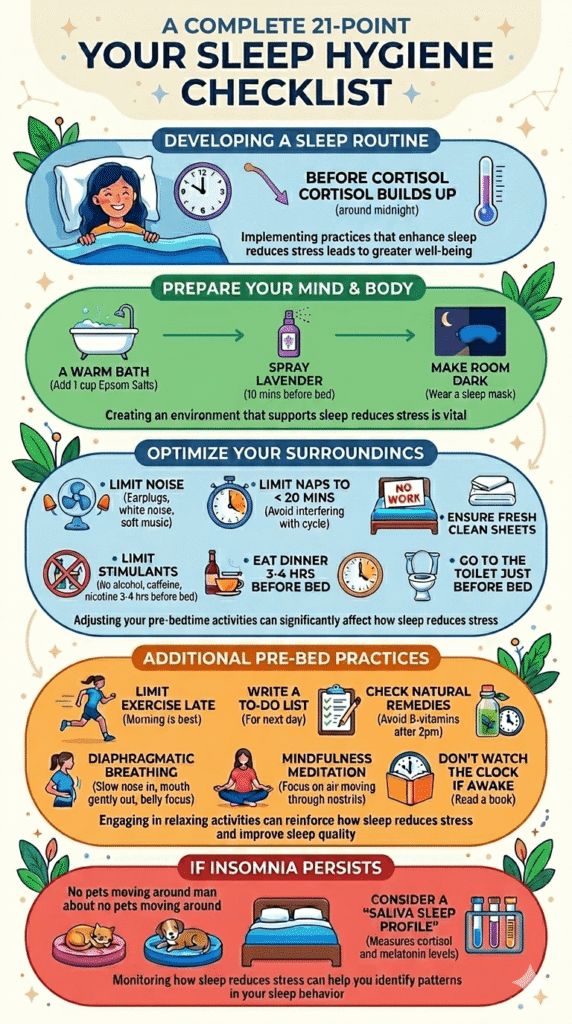
Your Sleep Hygiene Checklist
- Develop a sleeping routine that prepares your body for rest each night.
- Decide what time you want to go to bed. For the best sleep, I recommend around 9:00—10:00 pm, before cortisol levels start to build up at midnight.
- Make sure the bedroom temperate is comfortable for you. Ideally sleep at a temperature that is slightly cooler than your body temperature.
Implementing practices that enhance how sleep reduces stress can lead to greater well-being.
- Have a warm bath to relax your mind and body and prepare you for sleep. Take it up a level, add 1 cup of Epsom Salts to enhance muscle relaxation.
- Eating a small amount of protein before going to bed may help you sleep through the night.
- Spray lavender in the bedroom 10 minutes before going to bed.
- Is the room dark enough? If not, wear a sleep mask.
Creating an environment that supports how sleep reduces stress is vital for restful sleep.
- If noises are bothering you consider earplugs, white noise from a fan or soft relaxing music playing in the background that you can go to sleep too.
- Limit daytime naps to 20-minutes or less. Longer naps can interfere with your normal cycle — circadian rhythm.
- Don’t work in bed. It is a place to rest and sleep.
Are the sheets clean, fresh, and is the bed made correctly? - Limit alcohol, caffeine and nicotine at least 3-4 hours before bed. These are stimulants and will keep you awake or disturb your sleep.
- Eat your dinner at least 3-4 hours before going to bed.
- Go to the toilet just before you go to bed. This can prevent you from getting up to empty the bladder during the night.
Adjusting your pre-bedtime activities can significantly affect how sleep reduces stress.
- Limit exercised in the last 3-4 hours before bed. The best time to exercise is in the morning before breakfast.
- When you get home and before you retire, write down anything you have to do the next day, so it is not bothering you during the night.
- If taking natural remedies, make sure they are suitable and don’t stimulate you if taken at night. For example, taking B-vitamins after 2:00 pm can disturb your sleep.
- Relax into rest with Diaphragmatic Breathing. Lie down on your bed, facing up and place your hands on your belly. Start by slowly breathing in through your nose and then release the breath gentled out through the mouth. Focus on moving the hands up and down on your belly as you breathe in and out. Do this until relaxed.
- Calm the mind for sleep with Mindfulness Meditation. On your bed, lay down, facing up with your hands by your sides. Gently breath in and out through the nose. Bring your awareness to the sensation of air moving through the nostrils. If your mind drifts, bring your attention back to the feeling of air moving through the nostrils. Repeat until calm.
- If you cannot rest, don’t watch the clock. It creates more stress and anxiety. Read a book.
Engaging in relaxing activities can reinforce how sleep reduces stress and improve sleep quality.
- No pets, moving around the house or on the bed? Train your pets to sleep on their bed.
- If insomnia persists, it may be helpful to do a “saliva sleep profile” that measures cortisol and melatonin levels.
Monitoring how sleep reduces stress can help you identify patterns in your sleep behavior.
How to use this information
The suggestions here are general in nature and do not take into account your specific needs. Before you make changes to your routine or embark on any herbs or nutritional supplements, it is wise to check with your health care professional.
Understanding how sleep reduces stress is essential for effective self-care.
In health and wisdom
Brendon

Written by:
Brendon Groves
Clinical Naturopathic Practitioner
Founder of “Groves Naturopathics” and “The Groves Lifestyle Diet”
Adv. Dip. H. Sc. Nat, Dip. H. Sc. H.M., Dip. H. Sc. Nut.
Advance Diploma of Naturopathy, Diploma of Nutrition, Diploma of Herbal Medicine.
Special interests in: Weight loss, digestive issues, anxiety and mood disorders, immune support.
Incorporating knowledge of how sleep reduces stress can enhance your health journey.